How to Choose the Right Cat Bed (A 5-Step Guide)
You've bought a cat bed. Your cat sleeps on the box it came in. Sound familiar? Here's how to pick a bed your cat will actually use.
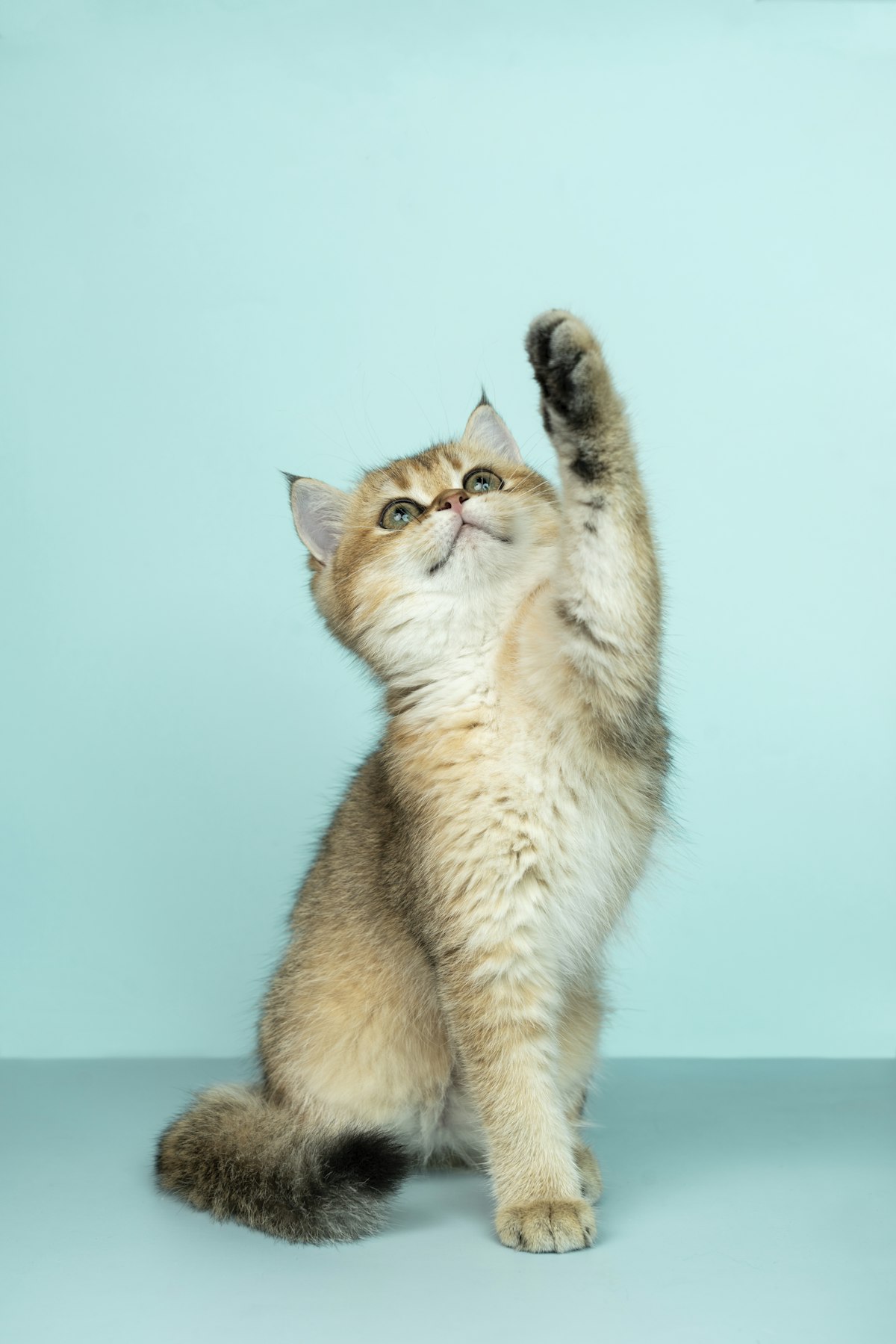
Every cat parent has been there. You spend $60 on a plush, highly-rated cat bed, bring it home, and within a week your cat has claimed the cardboard box instead. It's one of the most common complaints we hear at CATISM — and it's almost always solvable.
The truth is, cats aren't rejecting your bed because they're ungrateful. They're rejecting it because it doesn't match what they actually need. A healthy young cat and a 14-year-old arthritic cat have different needs. A cat who sleeps in closets has different needs than one who sunbathes on the windowsill.
Here's the 5-step framework we use when helping customers pick a CATISM bed for their cat.
Step 1: Identify your cat's sleep style
Spend a day watching where your cat naps. Not the bed you bought — wherever they actually sleep. Most cats fall into one of three sleep styles:
- Burrowers. These cats seek out enclosed, dark, warm spaces. They sleep under blankets, in closets, inside cardboard boxes, under beds. They want to feel covered.
- Loafers. These cats prefer open, flat surfaces. They sprawl on rugs, sofas, and sunny patches. They want room to stretch and shift positions.
- Perchers. These cats want height and a view. They sleep on top of bookshelves, cat trees, or the backs of couches. They want to observe their territory.
Most cats lean toward one style but will occasionally mix. The bed you buy should primarily match their dominant style.
Pro tip: If your cat sleeps inside cardboard boxes, you don't need a "better bed" — you need a cave-style bed. They're literally telling you what they want.
Step 2: Match the bed type to the style
Here's a quick translation guide from sleep style to bed type:
- Burrowers → Cave beds, hooded beds, tunnel beds. Anything with a roof and a sense of enclosure.
- Loafers → Flat mats, bolster beds, or open cushions with a slightly raised edge.
- Perchers → Window perches, cat tree platforms, or beds placed on high surfaces.
This is why our 2-in-1 Cat Cave Bed exists — it transforms between a cave (for burrower moods) and a flat mat (for loafer moods), which covers the majority of cats who switch between both.
Step 3: Consider age and health
Older cats, cats with arthritis, and cats recovering from surgery need more support and warmth than young, healthy cats. Look for:
- Self-warming materials (mylar-lined fleece reflects body heat without electricity)
- Memory foam or orthopedic padding for joint support
- Low entry points — if your senior cat has to jump or climb into the bed, they won't bother
Younger cats can generally use any well-made bed, but they appreciate durability — they're more likely to knead, scratch, and sprawl dramatically across the surface.
Step 4: Factor in anxiety level
Anxious and shy cats almost always want enclosed beds. If your cat is easily startled, hides when guests visit, or lives in a busy household with kids or other pets, skip the open cushion and go straight to a cave, hood, or tunnel bed. The enclosed feeling lowers their stress — and they'll actually use it.
We covered the science behind this in a separate post — Why Cats Love Enclosed Spaces — if you want to dig deeper.
Step 5: Pick the right spot (the bed can be perfect, but location matters)
Here's the step most guides skip: where you put the bed matters as much as which bed you buy.
A cat bed in the middle of a high-traffic hallway will get ignored no matter how great it is. Cats want beds placed:
- Near a window (for sun and observation)
- In a corner or against a wall (backs covered = safer)
- Away from food and litter (cats separate these zones instinctively)
- In a room where you spend time (most cats want proximity to their humans)
If your cat ignores a brand new bed for a week, try moving it before giving up. Nine times out of ten, that's the fix.
The short version
Pick a bed that matches how your cat actually sleeps. Choose the type (cave, mat, or perch) based on their dominant style. Factor in age, health, and anxiety. Put it in a good spot. That's it — and it works for almost every cat.
If you're still not sure which CATISM bed is right, browse our full collection or send us a message — we genuinely love helping people solve this.
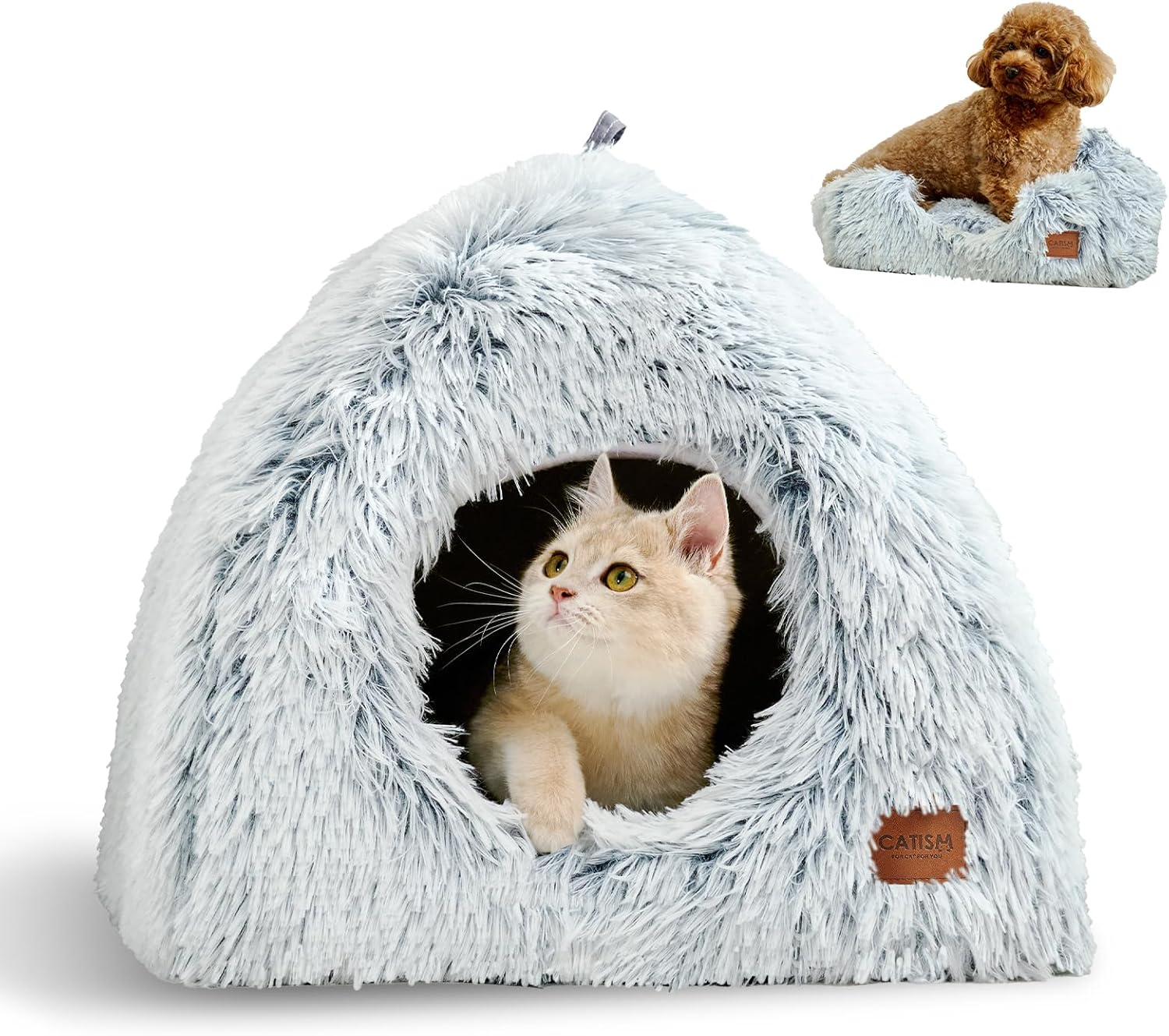
See the full CATISM bed collection
Cave beds, hooded beds, window perches, tunnel beds — all on Amazon.